
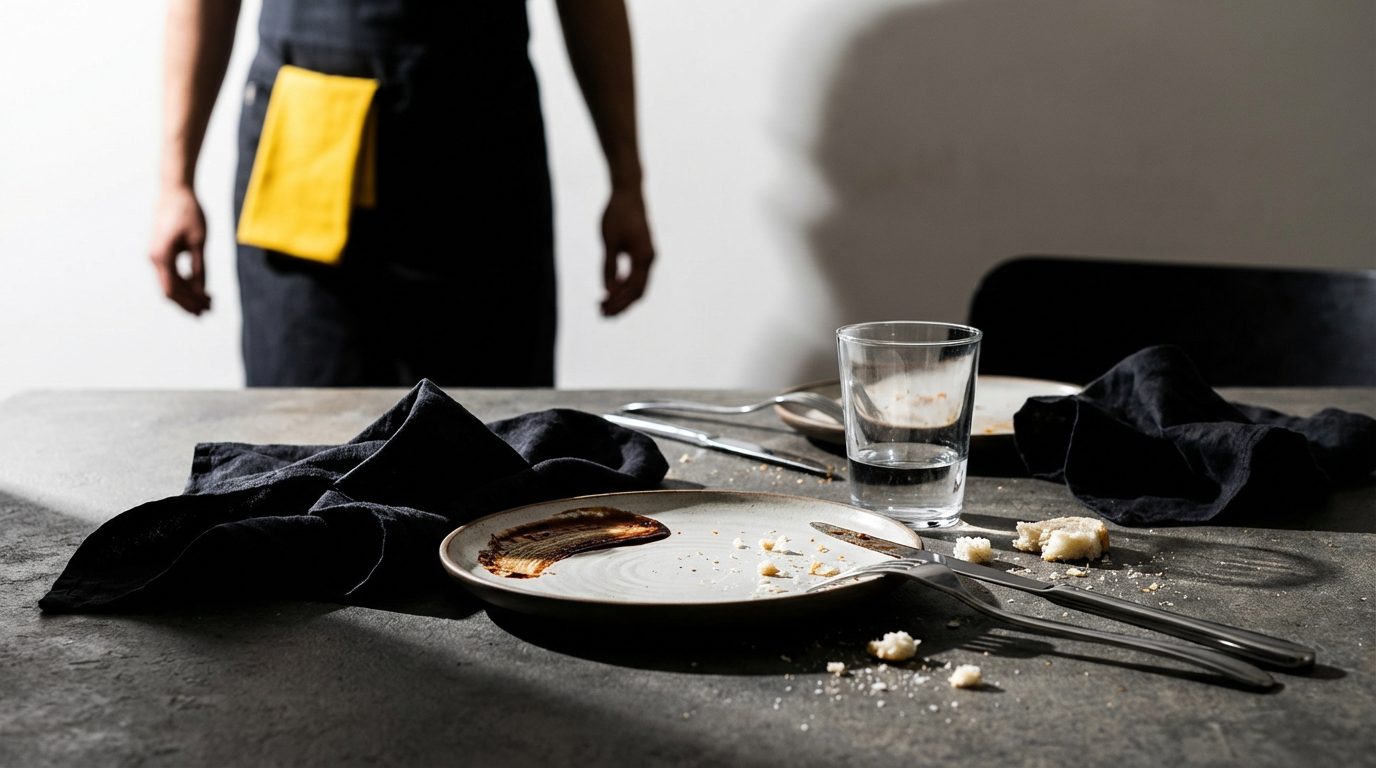
A post on r/KitchenConfidential pulled over 9,000 upvotes with two words of original commentary: “Could NOT agree more.” The image it shared — a familiar take about how people treat service staff being a direct readout of their character — lit up a comment section of nearly 300 responses. Most of them from people who have been on the receiving end.
The top comment framed it as a moral compass test. How someone treats the person bringing their food, clearing their table, or boxing their pizza is one of the most reliable indicators of who they actually are. Not who they perform as in front of equals or superiors — who they are when the power dynamic tilts entirely in their favour. The comment pulled nearly 2,000 upvotes on its own. Nobody disagreed.
Kitchen Bandits signal breakdown (original analysis)
We scored this thread as a “behavioural consensus” event: 9,000+ upvotes on the post, about 300 responses, and nearly 2,000 upvotes on the top comment. That puts top-comment agreement at roughly 22% of total post upvotes, which is unusually concentrated for a service-culture thread. In plain terms, the community did not just react; it aligned on one core standard: treat staff with visible respect.
What made the thread interesting wasn’t the principle. Everyone nods at “be nice to your waiter.” What made it interesting was the specifics. The stories from the line. The details that only come from people who watch this behavior every single shift and have stopped being surprised by it.
A pizza shop worker described the daily routine: customers order to-go so their food gets boxed instead of plated. Then they sit down, eat at a table, and leave an open pizza box full of crusts shoved into a trash can — directly beneath a sign that says “please place boxes on the cart.” Every day. The same people. They know what they’re doing. They just decided it’s not their problem.
A donut shop worker added their version. 3 giant trash cans clearly visible from every table. And it’s the regulars — not the first-timers — who leave their mess behind. The people who come in every morning, know the staff by name, and still can’t be bothered to carry a paper bag 4 feet to the bin. The randoms clean up after themselves. The regulars don’t. Go figure.
One commenter described asking a repeat offender to please clean up after herself, given that it happened every single visit. She threw a tantrum. “How dare you ask that.” Her kid, standing right there, was the one who apologised. That detail stuck with people. The comments under it were short. Knowing. The kind of quiet recognition that doesn’t need elaboration because everyone reading it has their own version of the same story.
The thread split into two camps after that. One group argued that stacking plates and consolidating waste is the baseline — not a gesture, just basic decency. A non-industry commenter described their routine: stack plates, organize silverware, dump all the water glasses into one so the empties nest. Not because anyone asked. Because leaving a table the way you found it shouldn’t require a hospitality background.
The other camp — mostly career service workers — pushed back gently. The gesture is appreciated, but the stacking isn’t always helpful. Most experienced servers have a system. They know the order they clear, how to balance a tray, which side the glasses go. A well-meaning stack of plates in the wrong configuration can actually slow them down. The real ask isn’t “bus your own table.” It’s simpler than that: don’t make it worse. Don’t leave shredded napkins in congealed sauce. Don’t hide your trash under the plate like a kid hiding vegetables. Don’t act like the person cleaning up after you is invisible.
That last point is what the whole thread circled back to. Invisibility. The thing that bothers service workers most isn’t the mess — they signed up for the mess. It’s the pretence that the person handling the mess doesn’t exist. The eye contact that never happens. The conversation that stops when you approach the table and resumes before you’ve turned around. The tip left face-down like it’s a secret rather than a thank-you.
Someone quoted their mother: never trust anyone who’s a dick to their waiter. A simple rule. Universally endorsed in the thread and almost universally ignored in practice. The post didn’t go viral because it said something new. It went viral because every person who has ever worked a service job recognized it instantly, tagged someone who needed to see it, and moved on to the next table.