
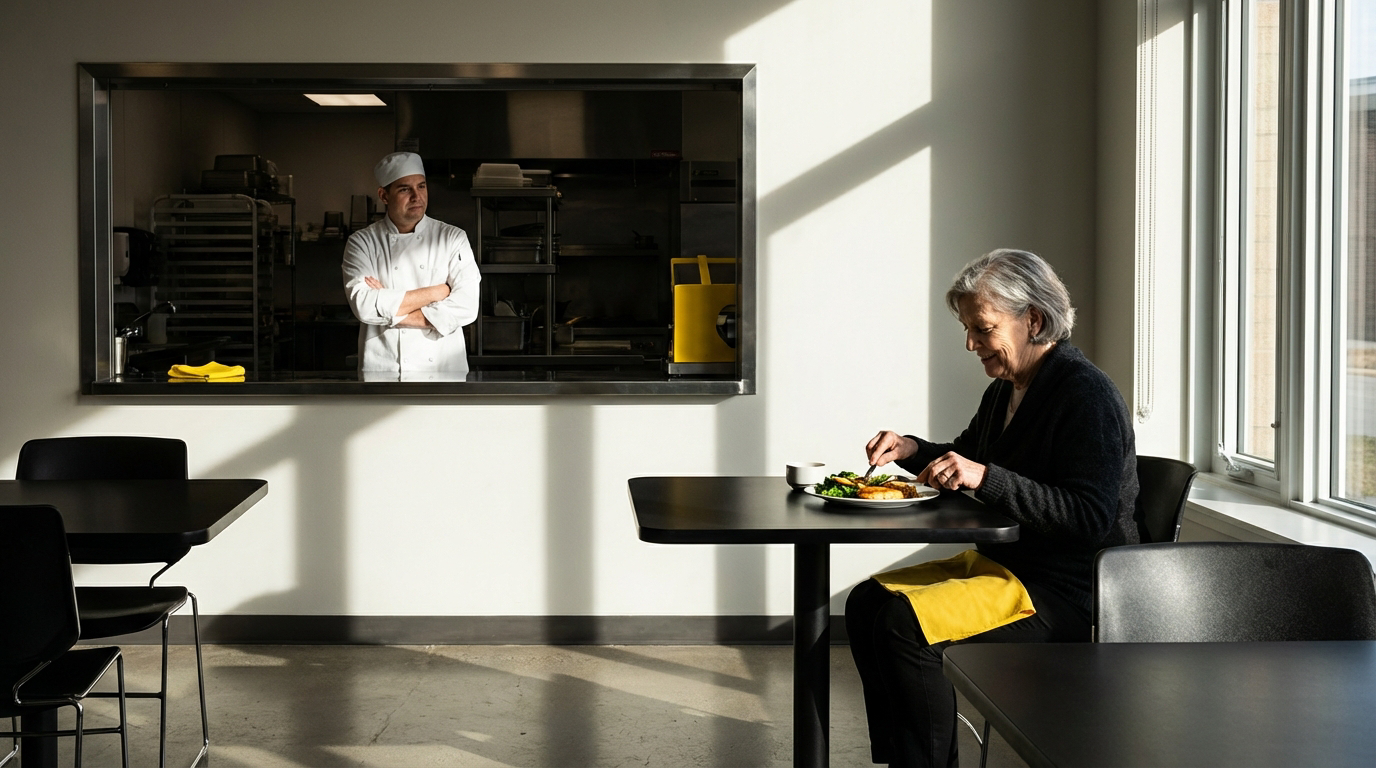
A post on r/KitchenConfidential pulled three thousand upvotes with a single sentence: “I think I found my unicorn, chefs.” What followed was the kind of thing you don’t see much on kitchen forums — a cook describing a job that sounds made up. In a retirement community kitchen. In Central Texas. $22 an hour to start.
The details did the work. Six a.m. to four p.m., five days a week. Same hours every single day. Health insurance. Dental. Vision. A set number of covers each shift because the residents eat at scheduled times. No surprise parties of thirty. No wait-list. No tickets at 9:45 p.m. on a Saturday. Cook for your people, clean your station, go home. Rinse and repeat.
After nine years of the line — which is code for getting hammered by every kitchen circumstance that exists — this sounded like a hallucination. The comments knew it. “That sounds pretty good,” one said carefully. “Just wait till half of them think you’re their grandson and start giving you twelve-dollar tips.” Another: “You found the thing we all tell ourselves exists but doesn’t.”
Except it does exist. It’s just not glamorous, so nobody talks about it.
The thread split on whether this job was real or aspirational fantasy. Career cooks know the ceiling on a retirement community kitchen. It’s limited by the number of residents and the operational budget. You’re not doing complicated tasting menus. You’re not getting Michelin-starred recognition. You’re not building a reputation that opens doors. What you’re doing is cooking for people who have stopped caring about proving anything. They want to eat. They want it to taste good. They want to sit down with you and talk about their day.
That last part is what moved people. The comments that got the most upvotes weren’t about the money or the hours. They were about the residents. “Walk through the dining room and ask how everything is, how their day is going.” Another: “The older ladies loved when we did chef demos for them.” A third: “The people you cook for matters.” This wasn’t a job. It was a cooking environment where the relationship between the person making the food and the people eating it was actually visible.
There’s a word for that in fine dining: it’s called service. But in fine dining, service is transactional. The diner is a transaction. The meal is a review that may or may not hit the right note in a magazine. In a retirement community, service is what it actually means: you’re feeding people who will see you tomorrow and the day after that. They’ll remember your face. They’ll ask you to do the thing again that they liked last week.
One commenter brought up the hidden cost of that. In a tight kitchen with repeat customers, you can’t half-ass it. You can’t have an off night and hope nobody notices. The woman who asks you every Tuesday how you’ve been will notice if you’re prepping carelessly. She’ll eat it and she’ll know. That’s a level of accountability that the line doesn’t have. On the line, you hide in chaos. Here, you hide nowhere.
But that accountability is also what chefs say they want. Immediate feedback. A reason to care about every plate. No separation between the work and its impact. The comments from veteran cooks had a tone underneath them that took a while to recognize. Envy. Not about the salary — retirement community kitchens don’t pay much. Envy about the structure. The possibility of cooking for people who matter to you without the machinery of a restaurant breaking you in the process.
One comment put it plainly: “Don’t disappoint him.” Another, from someone older: “I’m jaded and I needed to hear this stuff sometimes.” They were responding to the post about the job, but they were really responding to something else. The suggestion that the thing you’re actually looking for might not be a Michelin star. It might just be stability and the chance to be good at something in front of people who know your name.