
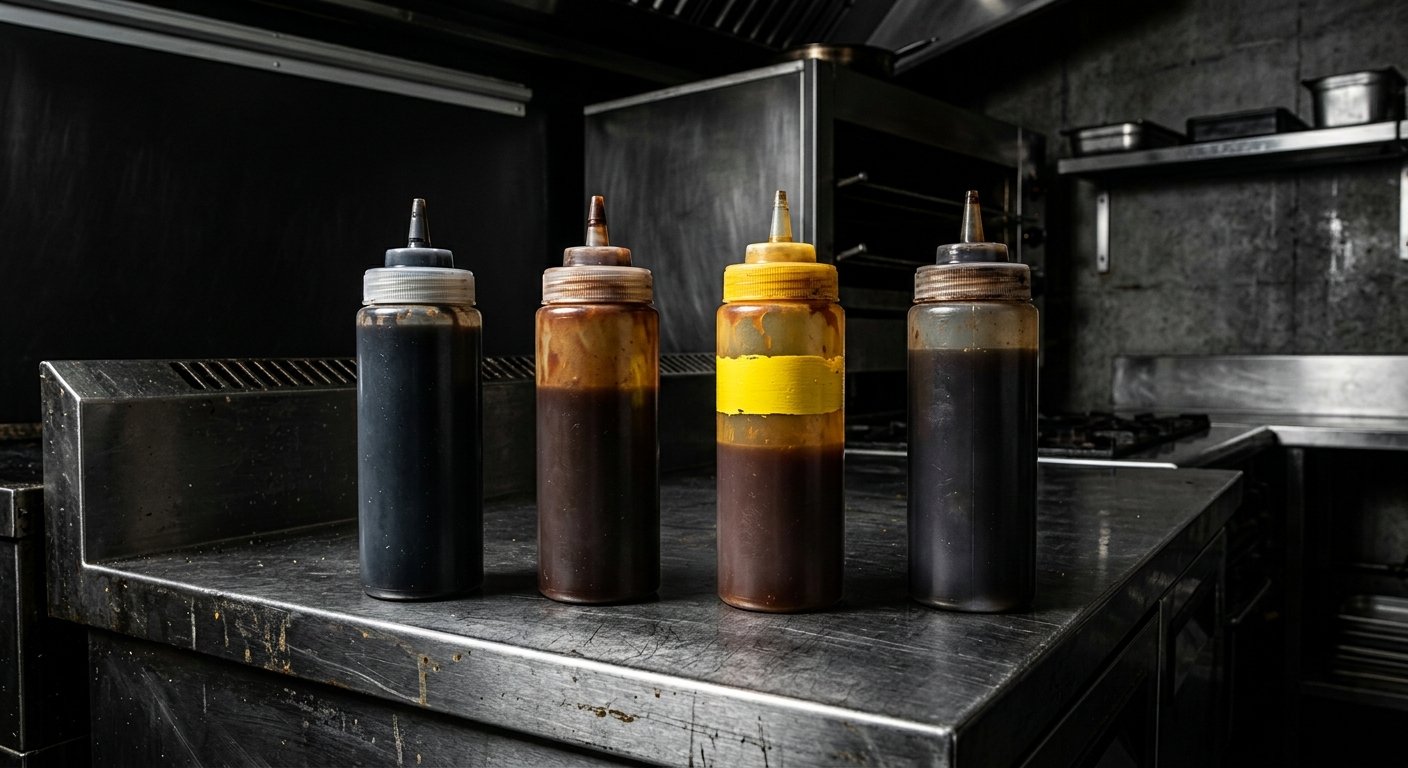
Squeeze bottles are on every prep station in every commercial kitchen. They’re cheap, replaceable, and treated like consumables. Most kitchens buy whatever’s available in bulk and don’t think about it again until something goes wrong.
Something usually goes wrong.
What to look for in a restaurant squeeze bottle
Material. Check the bottle’s stated material, intended use, and temperature limits with the manufacturer. Avoid generic unmarked bottles with no material specification.
Local requirements. Your jurisdiction or operation may require specific bottle documentation. Check the exact requirement instead of treating one logo as universal approval.
Tip size. Fine tips for plating sauces and precision work. Standard tips for most prep station uses. Wide-mouth tips for thicker sauces, aioli, or high-volume applications. If you’re using the same tip for everything, you’re making more work than you need to.
Capacity. Choose capacity from the actual service volume, refill rhythm, storage space, and handling needs. Capacity is not a reliable shortcut for bottle diameter.
What to avoid
Bottles with caps that seal poorly create leaks and unreliable storage. Test the cap before buying in bulk.
Bottles with no-name tips that crack in the dishwasher. Tip failure during service means a broken stream, a mess, or a delay you don’t have time for.
Clear bottles with no identification system. They can look identical when full of different products, so the station needs a consistent naming method.
The labeling problem
This is where most kitchens lose time and create risk.
Tape falls off in the cooler. Marker fades. After a few days of washing and handling, a labeled bottle becomes an unlabeled bottle, and someone has to smell-test it or open it to check.
The identification method should match the kitchen’s documented process. A color can be a visual cue, but it does not create a food-safety system or replace training and segregation.
Kitchen Bandits silicone bottle bands grip by tension with no adhesive and provide a writable surface. They do not guarantee an operational or food-safety outcome.
Recommended bottle types by use
Plating and sauce work: Match a fine tip and bottle flexibility to the product, then verify the bottle’s stated intended use.
General prep station: Use a standard tip and a capacity the station can handle and refill consistently.
High-volume saucing or dressings: Consider a wider tip and prioritize easy cleaning, reliable caps, and manageable handling.
Oils and vinegars: LDPE, fine or standard tip. Flexible squeeze control prevents over-dispensing.
The bottle is a tool. It’s worth spending twenty minutes thinking about which tool is right for each job on your station, rather than defaulting to whatever arrived in the last supply order.