
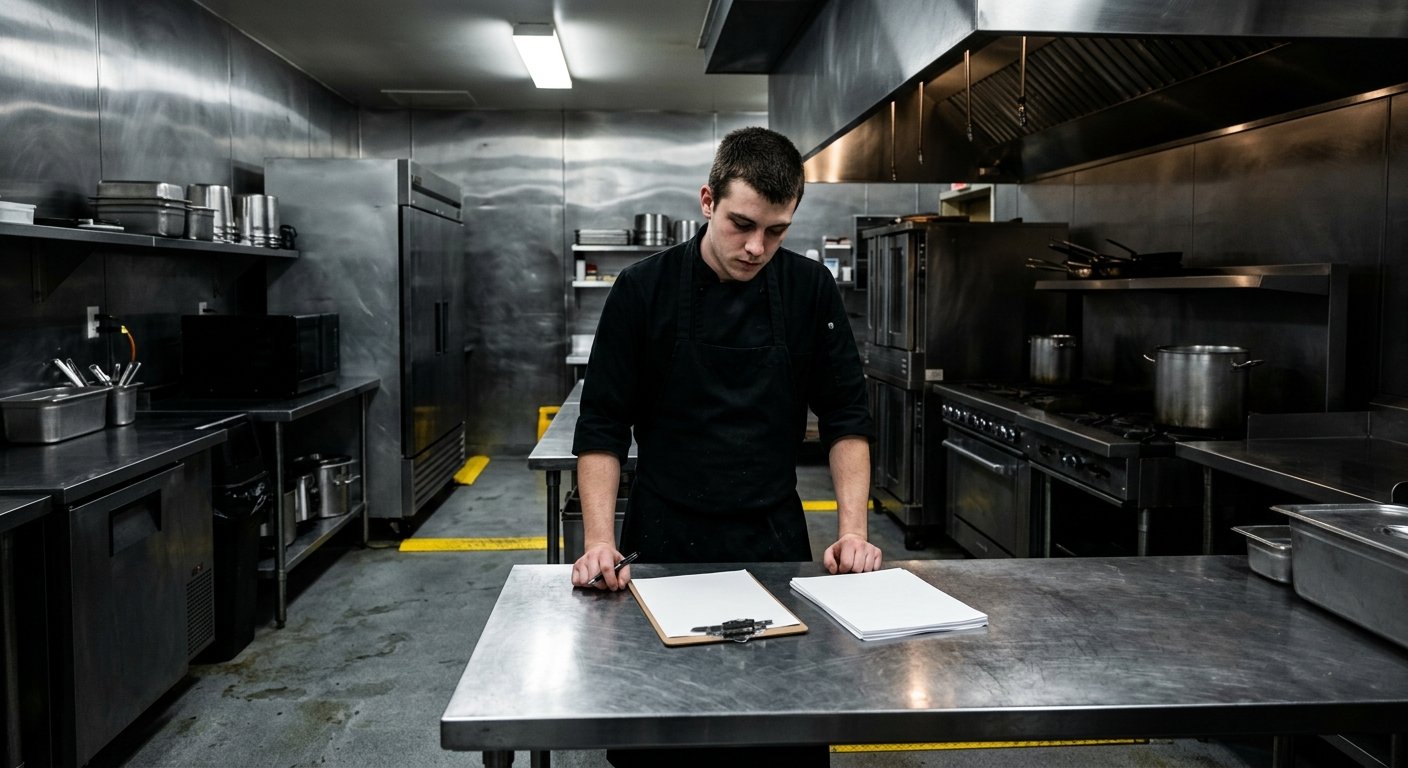
The person signed up to wash dishes.
Day one, they’re on the sink. Day three, the chef has quit and the owner is looking at them like they’re the plan.
No formal training. No cooking background. Just a willingness to show up — and now, apparently, a kitchen to run.
The Reddit post went up asking for help. Not in a panic. Just practical. How do I learn this fast enough to not destroy the place.
The kitchen absorbed that question and gave back something useful.
Get your food handler’s card immediately. Not eventually — before your next shift. Every jurisdiction has a version of it and running a kitchen without one is a liability that lands on you personally.
Build a prep list. Write down everything that needs to happen before service and in what order. It doesn’t need to be elegant. It needs to exist. A kitchen without a prep list runs on memory, and memory fails when things get busy.
Learn the temps. Chicken is 165°F/74°C. Pork is 145°F/63°C. Beef (ground) is 160°F/71°C. These aren’t guidelines — they’re the line between a kitchen incident and a very bad headline.
Get the station right before you worry about the food. Where things live matters more than how they’re cooked. You can look up a recipe. You cannot look up where the 86’d sauce ended up if no one put it back in the right spot.
The rest — technique, speed, instinct — that comes from reps. There’s no shortcut, but there are plenty of people in the industry who learned the same way.
More of them than will admit it.
Ask questions. Keep a notebook. Don’t fake it when you don’t know something — that’s how kitchens get people hurt.
You didn’t ask for the job. But you showed up, which already puts you ahead of the chef who didn’t.