
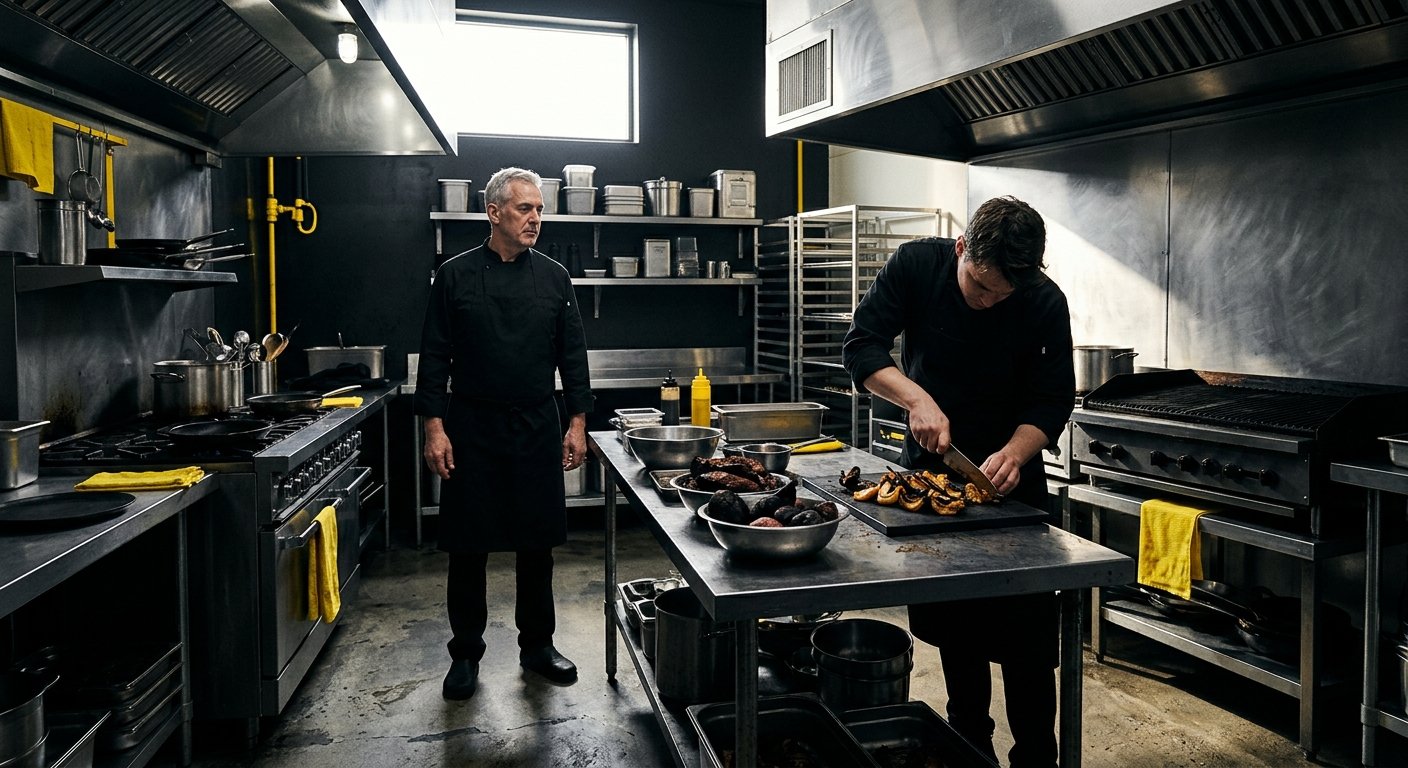
The cook showed up still drunk from the night before. More than once.
The chef — who doesn’t drink, as a matter of faith — noticed. Didn’t fire them. Patted them on the back and sent them home. Said: you have a problem, and you need to work on it.
Then let them come back.
Kitchens eat people. That’s not a metaphor — it’s documented. The hospitality industry has rates of substance use disorder well above the national average. It’s not because the work attracts broken people. It’s because the work breaks people, and the culture has historically responded by handing them a drink and moving on.
The late nights. The physical intensity. The adrenaline crash at the end of service. The social world that exists almost entirely in bars. The financial pressure that makes it hard to leave even when you should. These aren’t excuses. They’re the conditions.
Most chefs respond to a cook who shows up impaired by firing them, or by looking the other way until the problem becomes too obvious to ignore — at which point they fire them. Either way, the cook is out and the cycle continues somewhere else.
This chef did something different. He named it. He said: this is a problem, it’s yours to solve, and I’ll hold the door while you do.
That’s a harder position than firing. Firing is clean. Holding space for someone in the middle of a crisis means absorbing the disruption — the missed shifts, the half-performance, the tension it creates on the line. It means making a bet on a person when the person hasn’t earned it yet.
The cook got sober. Stayed at that kitchen. Still thinks about it.
The thread comments didn’t pretend this is common. They celebrated it specifically because it isn’t. Stories came in from cooks who’d been fired on the spot for less, from chefs who’d been the one in the walk-in putting someone’s stuff in a bag.
But also this: “I’ve been an EC for several years and I decided to try a hospital.” Different context, same principle — that the environment a chef creates determines what’s possible for the people working in it.
Most people who make it through a rough patch in this industry can name one person who held the line for them. Not a therapist, not a program — someone in a kitchen who decided not to give up on them before they could give up on themselves.
That chef didn’t do anything special. He just didn’t take the easy option.
Good people exist. Sometimes you find them in a kitchen.