
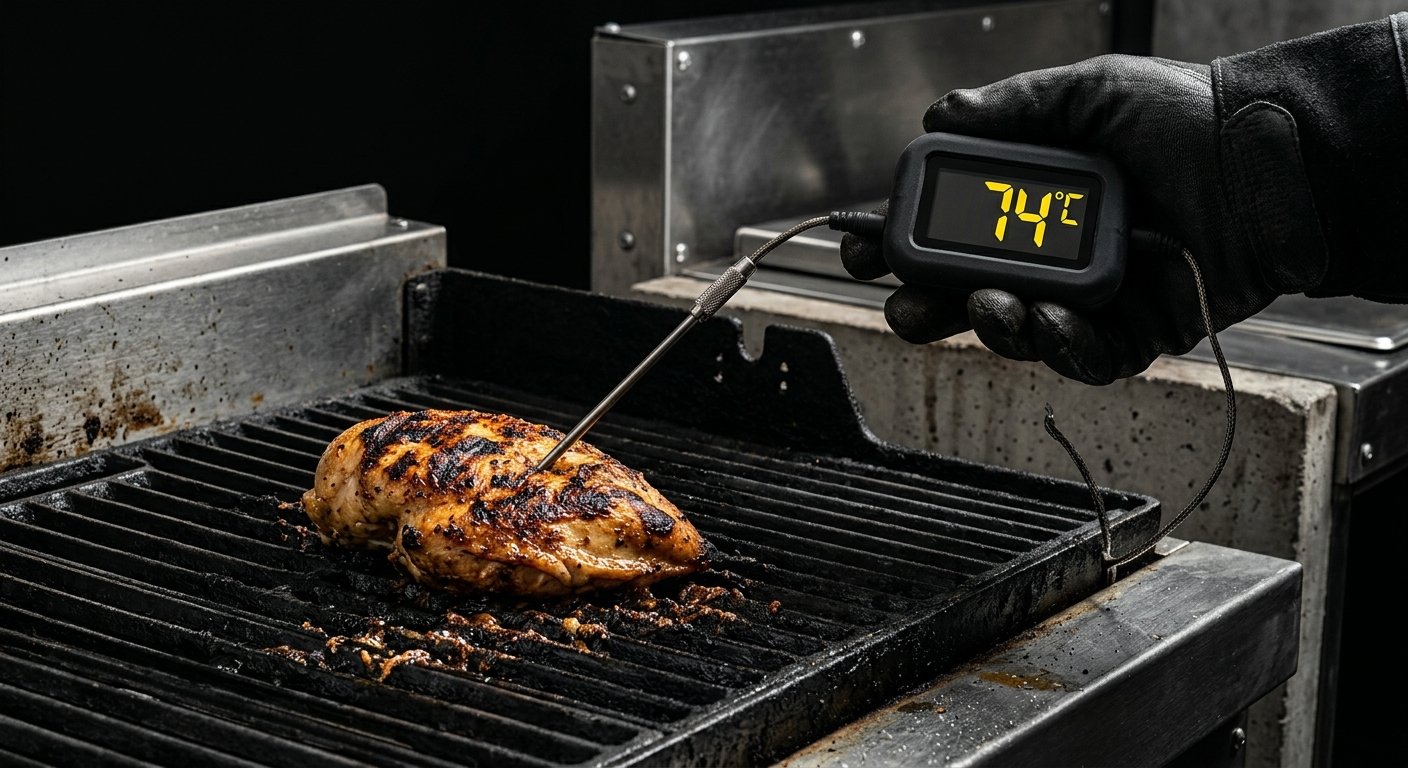
The cook temped the chicken correctly.
Pork and chicken, both probed, both hitting damn near 180°F (82°C) — well above the required 165°F (74°C) for poultry. Two minutes over time. Done properly.
The owner sent it back. Raw, he said.
This is a specific kind of awful. Not the chaos kind, not the understaffed kind — the kind where someone with no food safety training has decision-making authority over someone who does. The cook knows the standard. The owner doesn’t. And the owner’s name is on the door.
It would be bad enough if it stopped there. But this one didn’t.
The same owner had reorganized the walk-in. Not because something wasn’t working — just because. Everything moved. Labels that no longer matched locations. A system that the cooks had built and understood, dismantled overnight without conversation.
Two incidents in one post. Both the same problem.
The walk-in reorganization isn’t a quirk. It’s the same failure as the chicken call. It’s someone with authority and no operational knowledge overriding the judgment of people who are actually doing the job.
The cooks know why the walk-in was set up that way. They built it around service flow — what they reach for first, what needs to be cold versus accessible, what the health inspector is going to care about. When it gets changed arbitrarily, they’re not just inconvenienced. They’re working around someone else’s confusion during service. That’s when things get missed.
That’s when dates get overlooked. Allergens get confused. The wrong bottle comes off the shelf.
A kitchen’s organization system isn’t aesthetic. It’s operational safety.
The cook in the thread is holding it together. They’re temping correctly. They’re maintaining standards. They’re doing everything right and being second-guessed by someone who couldn’t tell the difference between a properly cooked protein and an undercooked one.
This is the transformation nobody warns you about when you take a kitchen job: your standards don’t protect you from someone else’s incompetence. You can be technically correct and still have your work undone.
What it does do — the correct technique, the proper system, the labeled station — is protect the guests. Even when the owner is wrong, the cook can be right. That’s worth something.
Some cooks in the thread had seen worse. Others had lived this exact scenario. The consensus wasn’t outrage — it was resigned recognition. Kitchens run on information. Labels, temps, locations. When that information system breaks down, people make mistakes. Not because they’re bad cooks. Because they’ve been set up to fail.
Keep your station clean. Keep your labels right. Keep your thermometer calibrated.
The rest is above your pay grade. And some days, that’s the whole job.