
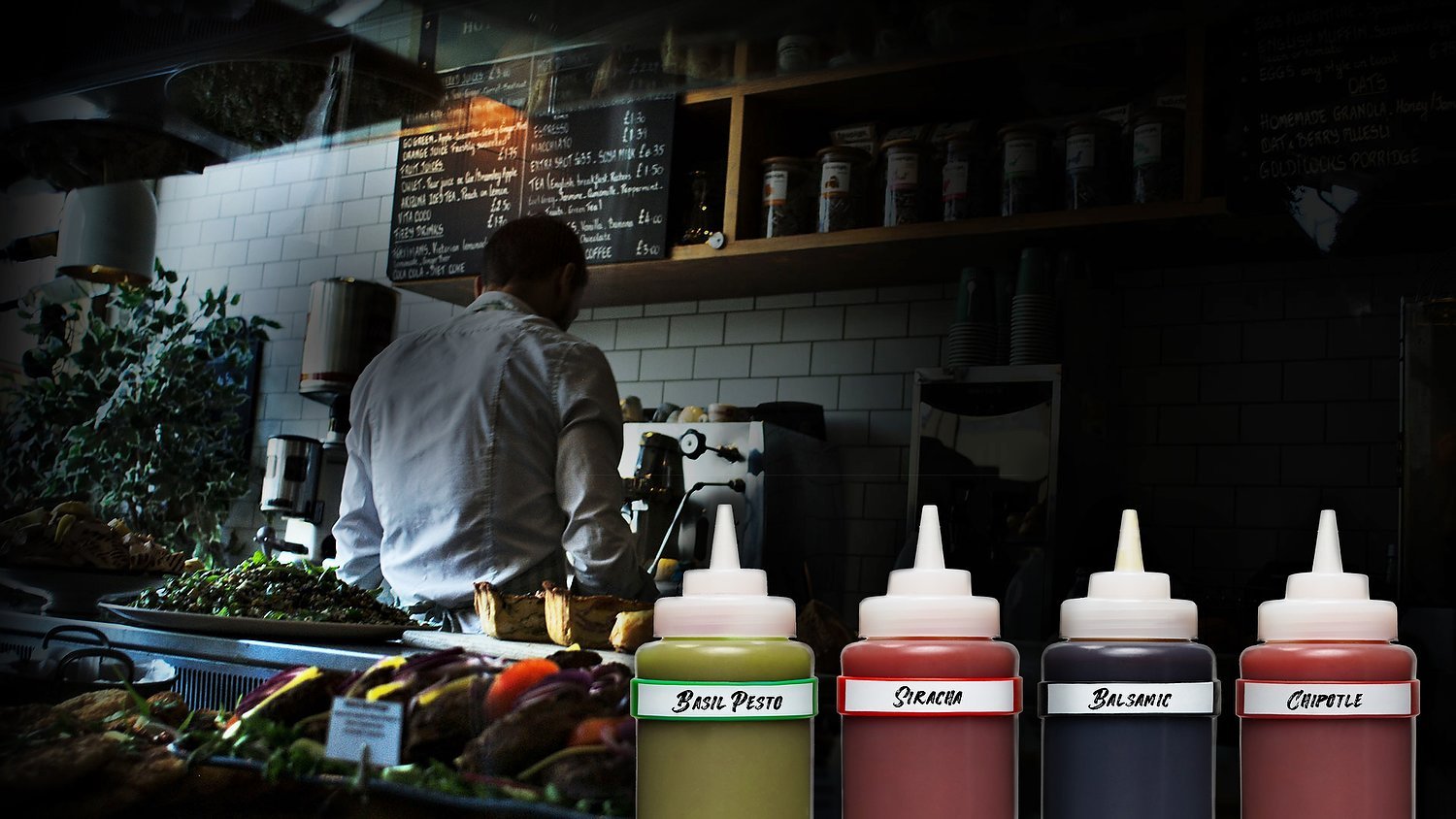
Every chef knows the drill. Start of shift, grab the masking tape, tear off a strip, scribble a label, wrap it around the bottle. By mid-service it’s peeling. By close, it’s a sticky mess.
Evidence snapshot
- Tape spend on a busy station commonly lands around $6-$20 per month.
- A 24-pack at $24.97 typically targets a 1-4 month payback window.
- Kitchen Bandits bands are heat-rated to 450°F and are sold in 55mm and 70mm live sizes.
The real cost of tape
Masking tape isn’t free — a busy kitchen burns through rolls every week. But the real cost isn’t the tape itself. It’s the time spent re-labeling, the health inspector side-eye when labels are illegible, and the cross-contamination risk when a label falls off entirely.
Think about it: your team is re-taping the same bottles multiple times per shift. That’s labor you’re already paying for, spent on something that shouldn’t need doing.
What makes silicone bands different
A silicone band wraps around the bottle once and stays there. Write on it with a dry-erase marker, wipe it clean when the contents change, and reuse it indefinitely. No adhesive residue, no peeling, no waste.
Here’s what that looks like in practice:
- Waterproof — survives the dish pit, ice baths, and cooler condensation
- Heat-resistant to 450°F — safe next to the flat top or in hot holding
- Dishwasher safe — toss them in with everything else at close
- Writable and wipeable — dry-erase marker writes on, wipes off, write again
The shift to reusable
More kitchens are ditching single-use labeling for the same reason they ditched single-use gloves for prep (well, almost). It’s cheaper over time, it’s faster, and it looks more professional when a health inspector walks through.
“We stopped buying masking tape three months ago. The bands just work.” — Line cook, Melbourne CBD
If you’re still tearing tape every morning, it might be time to try something that actually lasts.
Kitchen Bandits silicone bottle bands are available in 55mm and 70mm sizes, with 45mm and 85mm coming soon. Shop now on Amazon →. For food-safety labeling context, see the FDA Food Code.